A gallerist in Georgia brings UCLA alumni work together
“Via Café" is a nostalgic look at the Chinatown art scene of the early 2000s
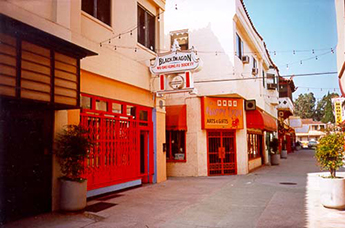
In the late 1990s and early 2000s, a handful of galleries in downtown LA’s Chinatown neighborhood opened amid souvenir shops and restaurants. With names adopted from previous businesses, China Art Objects and Black Dragon Society showed work by UCLA art students and became hubs of a burgeoning art scene. A DIY-inspired community of artists threw parties and staged concerts while selling their work at dirt-cheap prices, with some finding unexpected success.
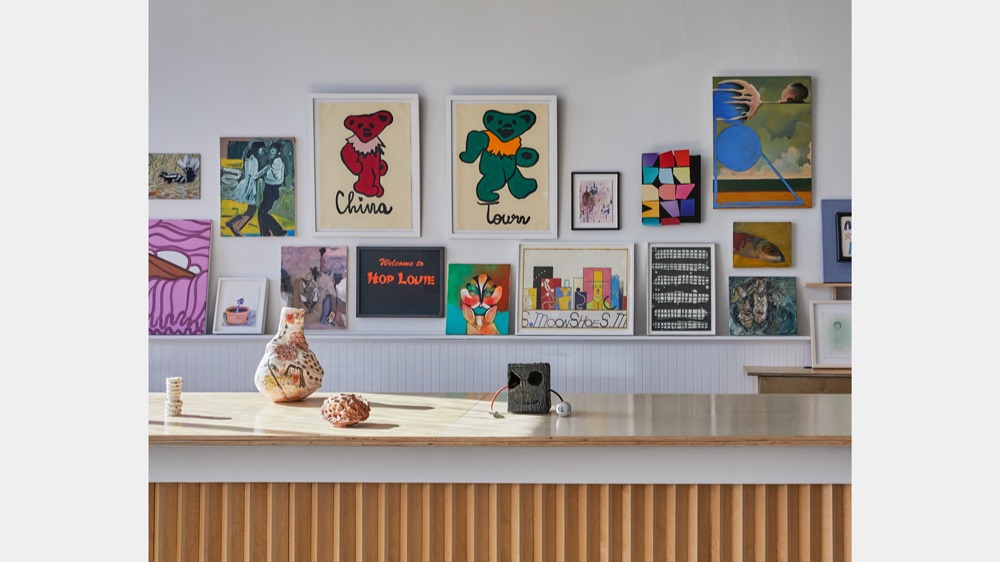
A new salon-style exhibition, Via Café, relives that heady time, bringing together work from about three-dozen old friends and UCLA alumni in a gallery in a town outside Athens, Georgia.
The gallery owner, Tif Sigfrids, was a University of Cincinnati dropout who moved to LA to make a movie. She got an internship at China Art Objects and became embedded in a community of local artists. She transferred to UCLA and took classes with painting and drawing professors Roger Herman and Lari Pittman. After graduating in 2005, Sigfrids worked as a musician, even putting out an album with the then-Chinatown dealer Joel Mesler and going on tour. She spent two years as director of Thomas Solomon Gallery in Chinatown, where she organized whimsical shows of miniature works on and around her desk. She launched her own eponymous storefront gallery in Hollywood and built on her reputation for offbeat shows. For her first exhibition, artist Joe Sola installed six tiny oil paintings inside her ear.
“It almost felt like I was like playing the part of a gallerist, and then eventually it became very real. But maybe at first having the gallery felt a bit like a performance in and of itself," Sigfrids said.
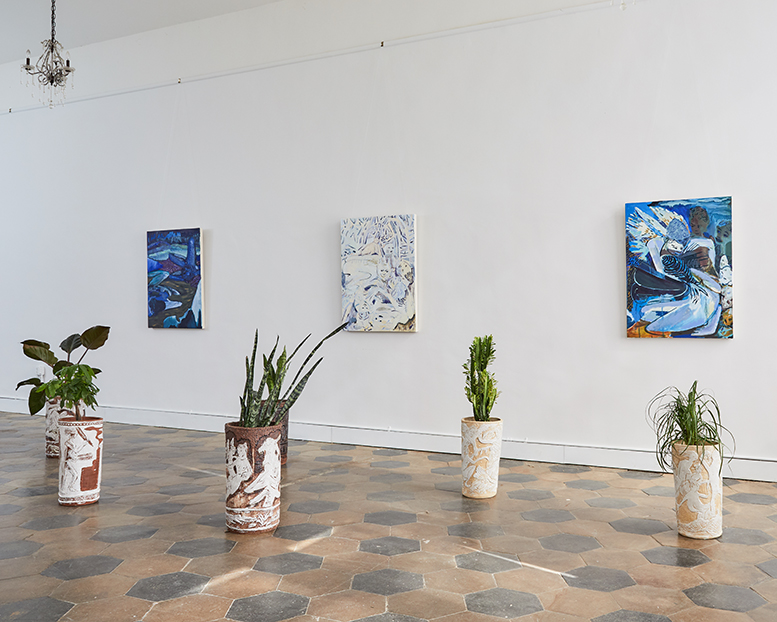
Installation shot of Jasmine Little's solo show Sphinx Riddle at Tif Sigfrids.
But fed up with Los Angeles’ high rents and the frenetic pace of running a gallery, and pregnant with her second child, she sought refuge in Athens, Georgia in 2017.
“I ran away from home to Athens as a punk teen in the late '90s,” Sigfrids said. “I would come back and visit friends that I made, and I always had this fantasy of living in the South."
Sigfrids’ gallery, in the town of Comer, is showing Via Café alongside Sphinx Riddle, a solo exhibition of paintings and ceramics by longtime friend and fellow UCLA alumna Jasmine Little. The pandemic delayed that show by nearly a year, during which time the pair organized an accompanying show featuring artists they knew from UCLA or from their time in Chinatown. They said everyone they asked to participate eagerly accepted.
Herman, a German-born artist and emeritus professor in the Department of Art, co-founded Black Dragon Society (the former kung fu studio's sign still hung above the door) in 1998 with Austrian painter Hubert Schmalix, photographer Eika Aoshima, and film producer Chris Sievernich. Herman often brought his UCLA students to Chinatown and introduced them to artists and gallery owners.
“We would do field trips where we would go to Chinatown and look at all the galleries and we would get dim sum. That was really fun when I was, like, 18 or 19," Little said.
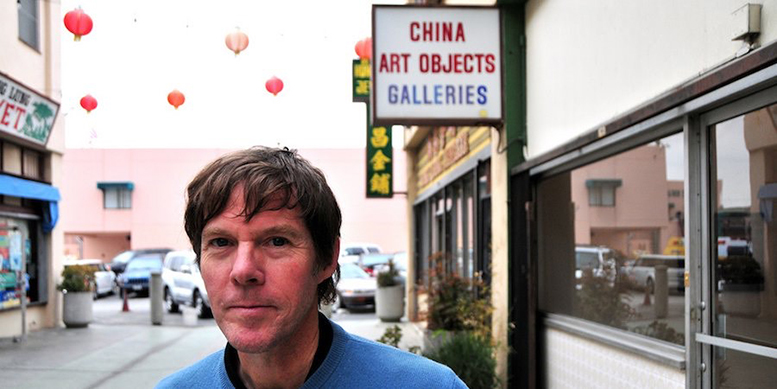
Steve Hanson, founder and owner of China Art Objects, outside the original gallery (Photo via KCET)
The group show recreates the salon-style display of Via Café, a Vietnamese restaurant owned by Duc Pham. Herman curated a rotating display of art on the Chinatown restaurant’s walls, including work by many of his UCLA students. He hung the work salon-style, a nod to the crowded walls of Paris Bar, the iconic Berlin restaurant.
Herman wonders now whether his students were ready for the world of art commerce, or whether they should have been left alone to focus on developing their style.
“After a while it became a feeding frenzy for collectors and it kind of lost its innocence,” Herman said.
Jon Pylypchuk’s first-ever show was at China Art Objects in 1999, as he was pursuing his MFA in painting at UCLA. At that point in his life, he recalls spending most of his time in Chinatown, making art, drinking with friends at the dive bar Hop Louie, and playing pick-up football games and marathon rounds of “Settlers of Catan.”
“I look back so fondly at that, I don't want to say naivete, but the youthful exuberance of what we were doing back then, and how nobody expected to have any sort of success in any way whatsoever,” Pylypchuk said.
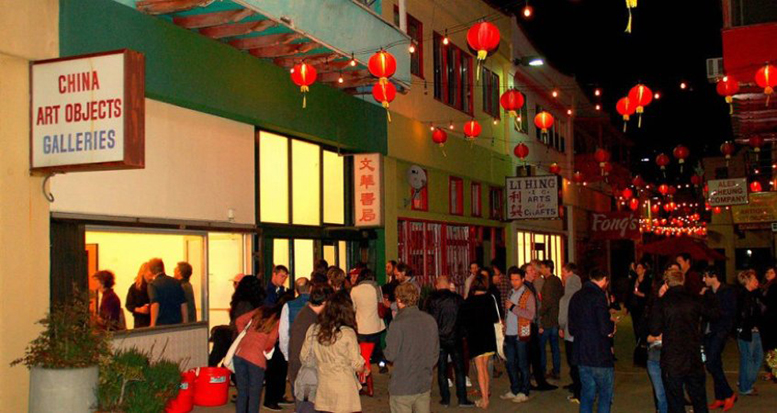
An opening at China Art Objects (Photo via Artspace)
Raffi Kalenderian was an undergrad at UCLA when he was included in a summer group show at Black Dragon Society. Even though he grew up in Los Angeles, being part of that art scene helped him find a foothold.
“LA is so big and sprawling, so it was one of these things that made LA small. You could go to this little thing and you'd see a hundred people that you knew," Kalenderian said. “It felt so easy and laid back and accessible.”
 |
 |
|
Black Dragon Society (Photo via artnet)
|
The Chinatown art scene had ebbed and flowed, and at the start of the Great Recession, China Art Objects and several other galleries relocated to Culver City. Black Dragon Society closed in 2008.
"It's great to think now, I guess it's like 15 years later, about how this strange little place could breed all of these serious careers for people,” Sigfrids said.
Sigfrids and Little both live in small towns (Little is based in Alamosa, Colorado) and have had some practice with maintaining socially-distant friendships. Curating the Via Café group show was a chance to reconnect with friends they’d made during their formative years.
“I think this was just a good time for it because people are really lacking that connection. And also, maybe nostalgia is all anybody has right now to keep them optimistic that there's a future that involves people,” Sigfrids said.
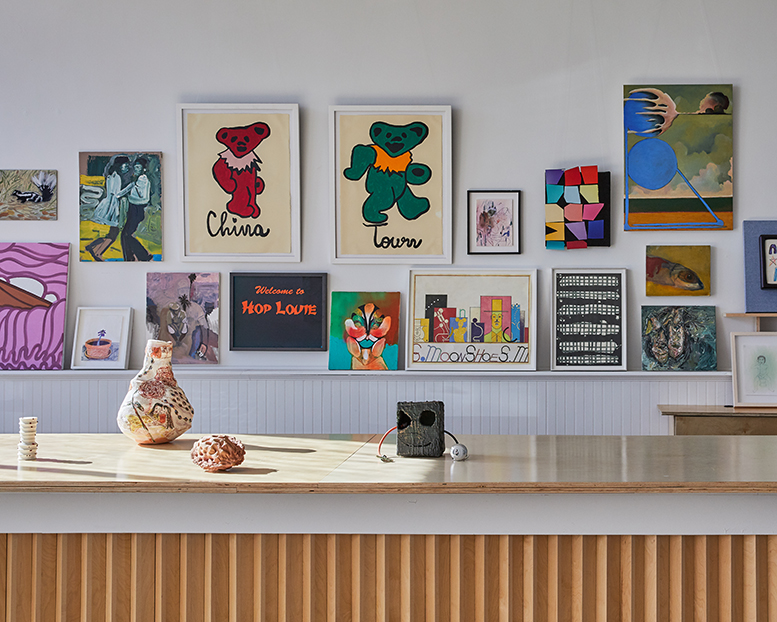
Installation shot of Via Café at Tif Sigfrids.
With Covid-19 forcing many businesses to switch to an online-only retail model, Sigfrids says having a brick-and-mortar gallery in Georgia doesn’t seem like such an odd choice. Many of her collectors buy work without ever seeing it in person.
 |
|
|
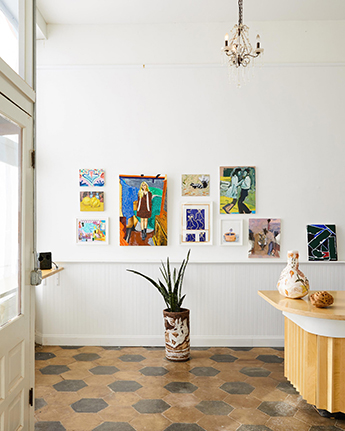
Installation shot of Via Café at Tif Sigfrids.
|
|
"There's not a whole lot of art commerce happening in Athens. But these days it doesn't matter as much as it would have 10 years ago, because people are pretty used to buying things from images that you send them in an email," she said.
The group show, while large, only begins to scratch the surface of that decade. Little hopes Via Café will inspire a larger retrospective of the artists from that era, and that it will be shown in Los Angeles.
"The Chinatown scene was really formative for me when I was a young person. And it just seemed like that social community doesn't really exist right now because of Covid,” Little said.
“It's a nice, romantic idea to see your work hanging with [the work of] of your friends and mentors and peers after a decade, when no one can really socialize now.”
Via Café and Sphinx Riddle are on view at Tif Sigfrids in Comer, Georgia through Feb. 27. Gallery hours are Saturday from 9AM to 3PM and by appointment. Masks are required upon entry to the gallery.
Story by Avishay Artsy
Stay engaged. Use #UCLAarts to stay connected.


