100 for 100: Arami Walker
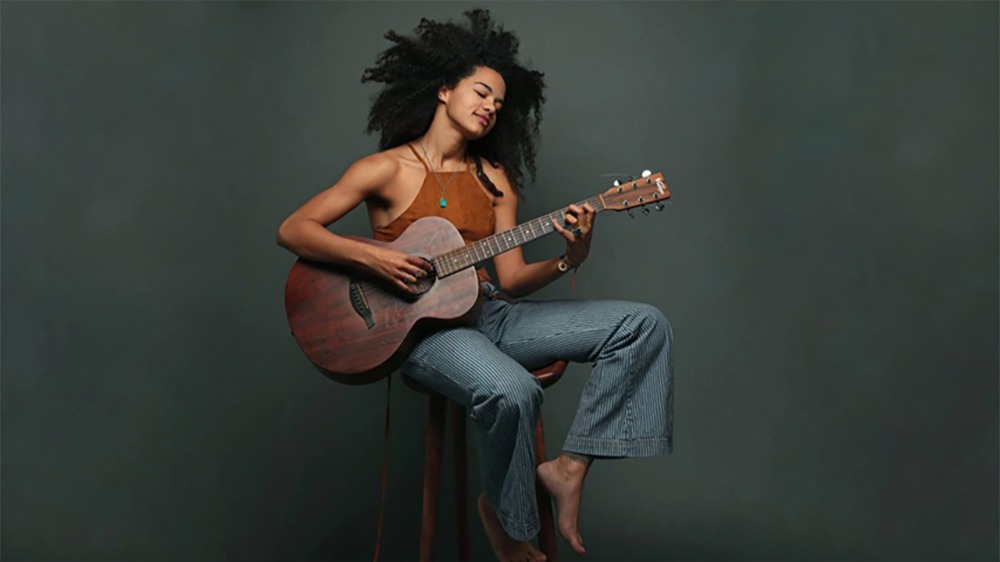
“A hundred years ago, there was no chance of me as a woman, or me as a person of color, even going to UCLA. Now different people and different brains are getting educated. And that's going to be a positive impact for the world.”
Arami Walker (BA, ‘16) studied World Arts and Culture with a focus on performance arts and arts activism. She’s an independent musician and is set to release her debut album this year. Arami (rhymes with Jeremy) talked to UCLA about how her undergraduate experience prepared her for her career. The conversation has been edited for length and clarity.
We're talking to you now in Seattle, where you live. What are you up to there?
I've been in Seattle for two years. I'm recording my first album that explores my relationship with humanity, nature and technology. I'll be releasing one song a month for the entirety of 2020. I'm working closely with the radio station KEXP to keep pushing my music forward. I've built a team organically of musicians and managers. I'm an independent artist, so it really does take a team, and it's slowly unfolding and I'm really happy with where I'm at in my career.

Arami Walker. Photo by Kim Doyel.
Can you describe your music for someone who's never heard it?
I started as a spoken word artist and slowly started infusing jazz, blues, hip hop, and soul. So really, it's just an accumulation of my African-American heritage in the form of sound. So, anything from gospel to R&B to hip hop will be on these tracks.
My dad's African American and my mom's Caucasian, but I definitely feel highly influenced by African American culture. All that has really been a huge part of my development. Nina Simone, Aretha Franklin, Esperanza Spalding, Lalah Hathaway. Angelique Kidjo, Jill Scott, Solange Knowles, Lauryn Hill, Erykah Badu. There are so many powerful singers that I got to see live that really have just transformed me. I mean, also rock too. I love Audioslave. I love The Beatles.
What made you want to go to UCLA when you decided to start here in 2011?
I love the campus. It's beautiful, it's sunny, it's expansive. There are so many excellent professors and mentors there. It's in the heart of LA, which as a performing artist is a great place to be developed. To have a safe space while pursuing performance art in LA is really ideal as opposed to just showing up in LA and trying to make it. Because it can be really challenging to support yourself in LA without the right guidance.
What did you make of your time at UCLA? What did you like? What did you wish was different?
I really, really took advantage of the experiential learning opportunities. So, traveling abroad, volunteering abroad... I traveled to Panama, China, Europe and South America studying Spanish and Mandarin, and in Europe I was studying romanticism and some guitar. I wanted to learn from experience. I feel like I probably could have been more dedicated in terms of studying harder, but I don't have any regrets in terms of my experience at UCLA. I had such a wonderful time there.
“I had a lot of opportunities to perform at UCLA,
which really has helped me become a better creator and musician.”
– Arami Walker
Can we talk about race? You identify as black. Your father is African American. Your mother is Caucasian. You came here as a black female student and - you emphasized in your email to us - as a non-athlete.
Yeah, absolutely. I'm African American, Choctaw Indian - which is a Native American tribe on my father's side - and then my mom is predominantly German and Irish. I had a great experience as a person of color and a female at UCLA.
I ended up hanging out with a lot of athletes. I don't even know what the percentage of non-athlete black people at UCLA is. I can't imagine it's more than one or two percent. I'm definitely athletic and I think my athletic achievements did contribute to the holistic reason why I was accepted. Maybe a lot of people assumed I was an athlete, but I was just 100 percent an academic. But I didn't really experience any sort of racism at UCLA. I didn't feel like I missed any opportunity because I'm a female or a female of color. And I definitely didn't feel treated differently by professors. But that's just my personal experience. I can't speak to other people's experience.
I do think that it would make more sense to not segregate incoming freshmen. There was a black weekend and an Asian weekend and a Mexican weekend and then there's everybody else, which is white people. During black weekend there's a talent show and everyone does their thing. And I think the goal of that is to give people of color the opportunity to connect with their culture and the group of people that they're familiar with, which is still a positive form of segregation, if that makes sense. But I think that everyone should be indoctrinated together. I think it would be really important for incoming white students to go to that talent show that we had to just recognize what makes my culture special and vice versa.
Did you perform at your talent show?
At that one? No, but I definitely did a lot of [performing]. There was an oratory competition once a year, the Martin Luther King, Jr. Oratorical Contest. I performed at Pauley Pavilion in my senior year for the incoming freshmen that year. So, I had a lot of opportunities to perform at UCLA, which really has helped me become a better creator and musician.
Was there anything else about UCLA that you would like to change outside of the orientation weekends?
Outside of cultural segregation, I feel like there's this North and South campus situation where math and science and technology are on one side of the campus and then you've got humanities and dance and music and writing and film on the other side. And as I'm moving forward in my art career, I'm realizing the importance of hearing from and being inspired by engineers and mathematicians and technology enthusiasts and scientists. My first job in Seattle was at the science center because I'm really inspired by those types of people, because I don't think like them.
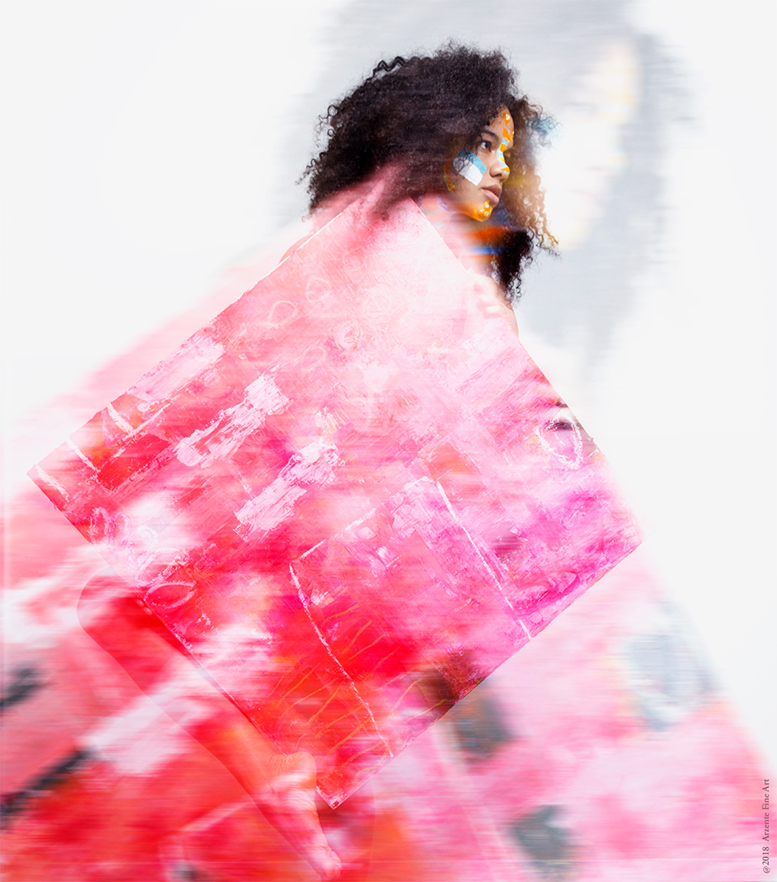
Arami Walker. Photo by Arzente Fine Art.
I think UCLA should encourage more collaboration and take an active role in getting artists and scientists to hang out, and getting actors and engineers to hang out. Because otherwise it's just going to be people who think like you in the same room as you. And that's not going to catalyze innovation.
Right now, I'm living with someone who was an engineer at Microsoft and he's creating a music video using a math set for my song. I don't know what that math set is. I don't know how to code, but he does. He doesn't know how to write music, but I do. And together we have this project.
“You either need to sign your rights away to a
record label that has already built a team, or build your
team from scratch. And UCLA really allowed me to have
that network of really incredible creators.”
– Arami Walker
How did the relationships that you created at UCLA help you with your music career?
I was in a cinematic artists' fraternity. I met Stephen Spies, who was the composer that I just flew [from Seattle to Los Angeles] to record with. I met Kate Bass, she was also a composer. So, I met all these filmmakers and musicians through that professional co-ed fraternity that allows me to have access to film editors, music video creators, composers now. At one of our [co-ed fraternity] events I met someone who worked at the UCLA film school who now works at the WACO Theater Center [in North Hollywood], and that person booked my last show at WACO, on February 14. WACO stands for Where Art Can Occur and was founded to empower emerging artists.
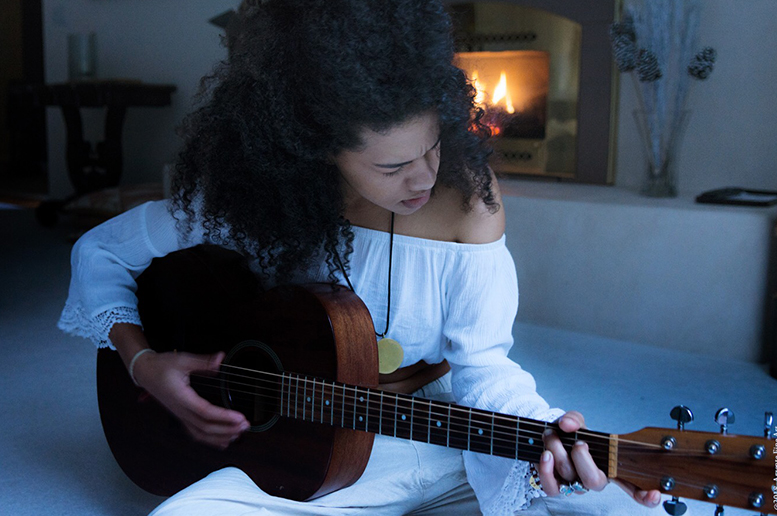
Arami Walker. Photo by James Arzente.
It's about this network of creatives that stay in contact, because you need a team. You either need to sign your rights away to a record label that has already built a team, or build your team from scratch. And UCLA really allowed me to have that network of really incredible creators. And also, I took a class called “Music and Dance” in the [Department of] World Arts and Cultures/Dance. It was half dancers, half musicians. Every week we had to be paired with a new dancer or musician and put on a performance once a week. We had six days to put on this show. And then I played a show in Venice Beach and my guitarist and violinist all took that same class, and we didn't even know that we were on the same bill. You synchronistically start crossing paths because you're connected through music.
Hear more of Arami Walker's work at her website.
Banner photo by Tatiana Wills.
Stay engaged. Use #UCLAarts to stay connected.


