10 Questions: What is Space?

The KCET 10 Questions publication series is a collaboration with the UCLA Arts 10 Questions event series, an interdisciplinary course/public event series featuring conversations with leading scholars that provides both students and the public a special opportunity to experience the conversations that drive innovation at the university.
Every Tuesday for ten weeks, UCLA faculty members from disciplines as diverse as dance, medicine, photography, astrophysics, athletics, Chicana and Chicano studies, law, philosophy and religious studies will join UCLA Arts Dean Brett Steele to explore a fundamental question such as: What is space? What is failure? and What is freedom? The goal is to stimulate dialogue and exchange, and to seed a greater understanding of the profoundly interdisciplinary nature of knowledge production in the 21st century. We present a discussion primer for each week's session to get the conversation started.
This week, Dana Cuff, Andrea Ghez, Rodrigo Valenzuela, and Paul Weiss will join Brett Steele, dean of the UCLA School of the Arts & Architecture, to explore the question, "What is Space?"
Dana Cuff, urbanist and architectural theorist
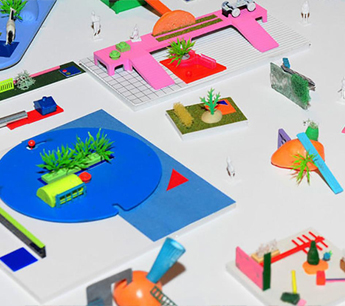
CityLAb, times 10 | CityLAb Professor of Architecture and Urban Design
Dana Cuff is Professor of Architecture and Urban Design at UCLA where she is also Director of cityLAB, an award-winning think tank that advances experimental urbanism and architecture. Since receiving her Ph.D. in Architecture from Berkeley, Cuff has published and lectured widely about spatial justice, the architectural profession, and affordable housing. She is author of several books, including The Provisional City about housing in Los Angeles, and a forthcoming book documenting her innovative cross-disciplinary project at UCLA called the Urban Humanities Initiative, funded by the Mellon Foundation. Based on cityLAB’s studies, she co-authored a landmark bill that permits “backyard homes” on virtually all 8 million single-family properties in California (AB 2299, Bloom-2016), doubling the density of suburbs across the state.
Tracking stars around the supermassive black hole at the center of the Milky Way: now and the future Andrea Ghez, astronomer
Professor of Astronomy and Physics
Professor Ghez is a world-leading expert in observational astrophysics and has used the Keck telescopes to suggest the existence of a supermassive black hole at the center of our galaxy, with a mass 4 million times that of our sun. She is currently using and developing high spatial resolution imaging techniques to study star formation and investigate the proposed massive black hole at the center of our Galaxy. Using Interferometric techniques and Adaptive Optics, Professor Ghez has been able to produce diffraction-limited images of astronomical objects that has up to the development of Adaptive Optics been impossible to observe with ground based telescopes.
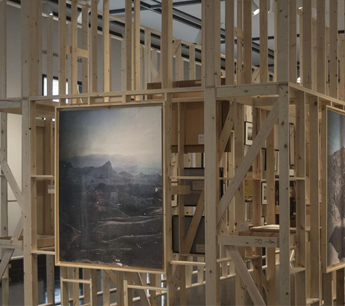
"Work in its Place" | Rodrigo Valenzuela Rodrigo Valenzuela, artist
Assistant Professor, Photography
Born in Chile and based in Los Angeles, Rodrigo Valenzuela is an artist working in photography, video, painting, and installation. Using autobiographical threads to inform larger universal fields of experience, his work constructs narratives, scenes, and stories that point to the tensions found between the individual and communities. Much of his work deals with the experience of undocumented immigrants and laborers.
His work has been exhibited internationally, including in recent solo exhibitions at Lisa Kandlhofer Galerie, Vienna; the Ulrich Museum of Art, Wichita, KS; the Art Museum of the University of Memphis, TN; Klowdenmann Gallery, Los Angeles; the Frye Art Museum, Seattle; and Museo de Arte Contemporaneo, Santiago, Chile. Rodrigo has held several artist residencies across the US and Canada including a fellowship at the Drawing Center, New York; the Core Fellowship at the Glassell School of Art, Museum of Fine Arts, Houston, TX; and residencies at the Skowhegan School of Painting and Sculpture, ME and the MacDowell Colony, NE.
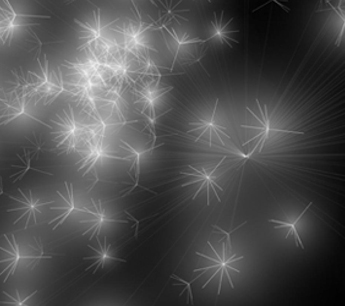
John Carpenter, Dandelion Clock Paul Weiss, nanoscientist
UC Presidential Chair, Distinguished Professor of Chemistry & Biochemistry, and Distinguished Professor of Materials Science & Engineering
Paul S. Weiss's interdisciplinary research group includes chemists, physicists, biologists, materials scientists, electrical and mechanical engineers, and computer scientists. Their work focuses on the atomic-scale chemical, physical, optical, mechanical and electronic properties of surfaces and supramolecular assemblies. He and his students have developed new techniques to expand the applicability and chemical specificity of scanning probe microscopies. They have applied these and other tools to the study of catalysis, self- and directed-assembly, physical models of biological systems, and molecular and nano-scale electronics. They work to advance nanofabrication down to ever smaller scales and greater chemical specificity in order to connect, to operate, and to test molecular devices. He has published over 200 papers and patents, and has given over 400 invited and plenary lectures.
— Oct. 1, 2018


This post is an excerpt. Read the full article on the KCET website.
Art&Arc100: 10 Questions sessions will be held on Tuesdays through December 4 from 6:30-8:30 p.m. in the Glorya Kaufman Hall theater (room 200). Free and open to the public (RSVP required). Pay by space parking available on campus adjacent to Kaufman Hall (Structure 4).
Stay engaged. Use #UCLAarts to stay connected.


